Malta turned out to be so different than I had anticipated. I left Italy for Malta, thinking that the two countries would share a plethora of similarities, especially when considering Southern Italy, but I was wildly surprised to find out that Malta has a completely unique flare of its own.
One trait of my personal travel style is that I love to explore cities within countries that are more off the beaten path and less overrun by tourists (eg. Turin, Italy and Cádiz, Spain). I was expecting to find some of these cities in Malta, but honestly, the sheer size of the country makes it nearly impossible. The capital city of Valletta itself only has a population of 355,000, making it the smallest capital city within the European Union. Being the largest city in Malta, however, it is where you will see the largest number of tourists. That and St. Julian/Sliema, but more on that later.
I will absolutely not deny the fact that the smaller communities in Malta are full of beauty and charm (and beyond stunning churches), but they really do not have many sightseeing attractions to offer to foreign visitors.
Something else that surprised me about Malta was the amount of vehicular traffic! For being such a small island, I never imagined that there would be so many cars on the road. On top of that, the terrain isn’t quite as mountainous as Italy, so I was shocked to see so many cars whizzing through the main squares of some of the country’s smaller cities. In Italy, many historical centers cannot even be accessed by car, which leaves more room for pedestrian activity to flood the streets.
Lastly, a word of caution. Unless you plan on spending your entire time at the beach, then I would avoid the high summer months. The temperature was a solid 97 degrees Fahrenheit every day, and extremely humid. It made for perfect beach weather on last day, but I think I would have preferred some more comfortable weather for all of the walking I did on the other two days.
Now, with all of that said, onto my recap!
The Basics
Length of Stay: Four nights, four days – I’m not going to count the fifth day because I left the country before breakfast
Currency: Euro
Hotel: 115 The Strand. I’m going to be blatantly honest here. This was a three-star hotel, so I really should not have expected much to begin with, but I was pretty unimpressed, even more so because my hotel in Kraków, Poland also had a three-star rating, and I would recommend it a million times over to anyone. The only outstanding feature was my balcony that overlooked the bay, so at least I had a lovely view to greet me every morning. My room was quite spacious, but there was an overwhelming smell of smoke every time I walked in. It obviously did dissipate, but yet, it’s not a pleasant smell to be greeted with upon entry to a room. Additionally, the hotel was under construction in some areas, which meant that only one elevator was sometimes working, and, much to my dismay, the pool on the rooftop was closed. Lastly, I would not have chosen to stay in Sliema, but the options for accommodations were slim pickings. Sliema and St. Julian are the two big resort-type areas of the island, so there is nothing uniquely Maltese about them. But if loud partiers, nightclubs, overpriced chain restaurants, and shopping malls are your thing, then this is the area for you.
Arrival Day
After a delay coming from Rome, I finally arrived in Malta around by 8PM. After walking outside the airport, I waited just under ten minutes for the bus to arrive, which brought me almost directly to my hotel. Bus seems to be the major mode of public transit in Malta, and is very easy to use, so that is essentially how I transported myself around the island. Each ride is normally 2€, but you can purchase a Tallinja card that is good for a certain amount of rides (depending on which package you purchase), which is what I opted for. Once you have the card, all you have to do is tap it every time you board the bus and you’re good to go. Upon arriving at my hotel, I checked in and then relaxed in my room for the rest of the night.
Day One
Breakfast: Bookbites. I overslept and missed the hotel breakfast, and woke up famished, so naturally I just chose the first available place, which happened to be located on the ground floor of the hotel. There definitely wasn’t anything special about this cafe, just a pretty typical breakfast joint for coffee and pastry, but was not a bad meal by any means.
Morning: I left my hotel and ventured for the capital city of Valletta. Once I disembarked in Valletta, I set out for the major sights. The first that I happened upon, located right at the bus terminal, was the Triton Fountain. Walking past the fountain, I immediately was met by the Valletta City Gate, which took me right into the old city. The main street that runs the length of the ancient walled city is Triq il Repubblika, and is lined with shops, cafes, and monuments.
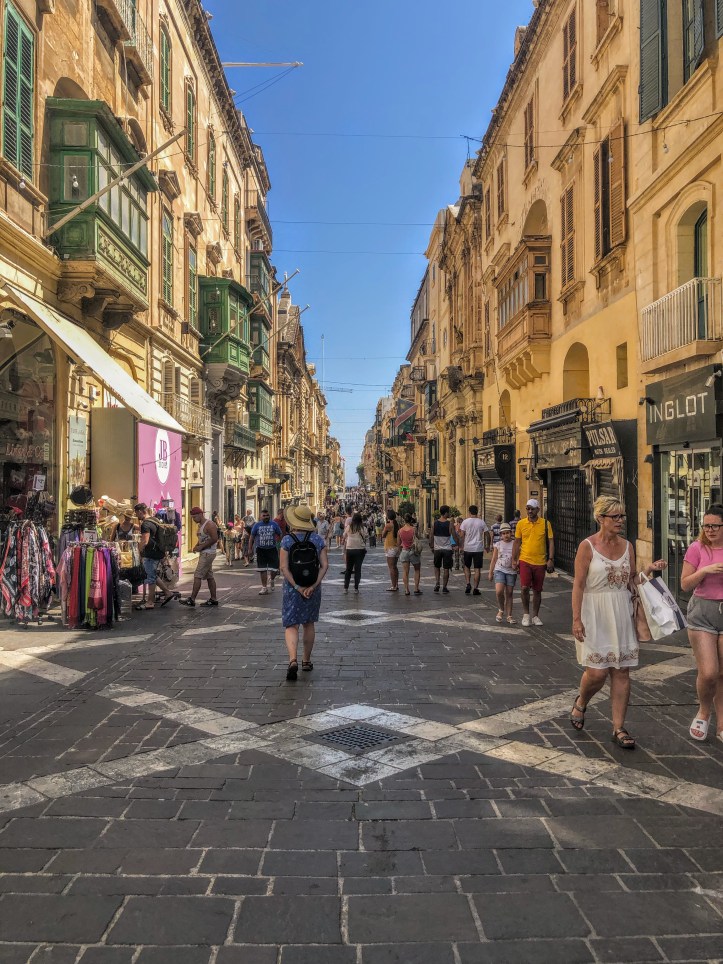
I followed the street all the way down to Fort St. Elmo, a star-shaped military fort built on the edge of the city that looks out onto the Mediterranean. It was there that I opted to watch an hour-long video presentation called The Malta Experience. The film provided a crash course in Malta’s rich and extensive history, and further explains why the island nation boasts such a unique culture. If you plan on spending an extended amount of time in Malta, then I would highly recommend it.
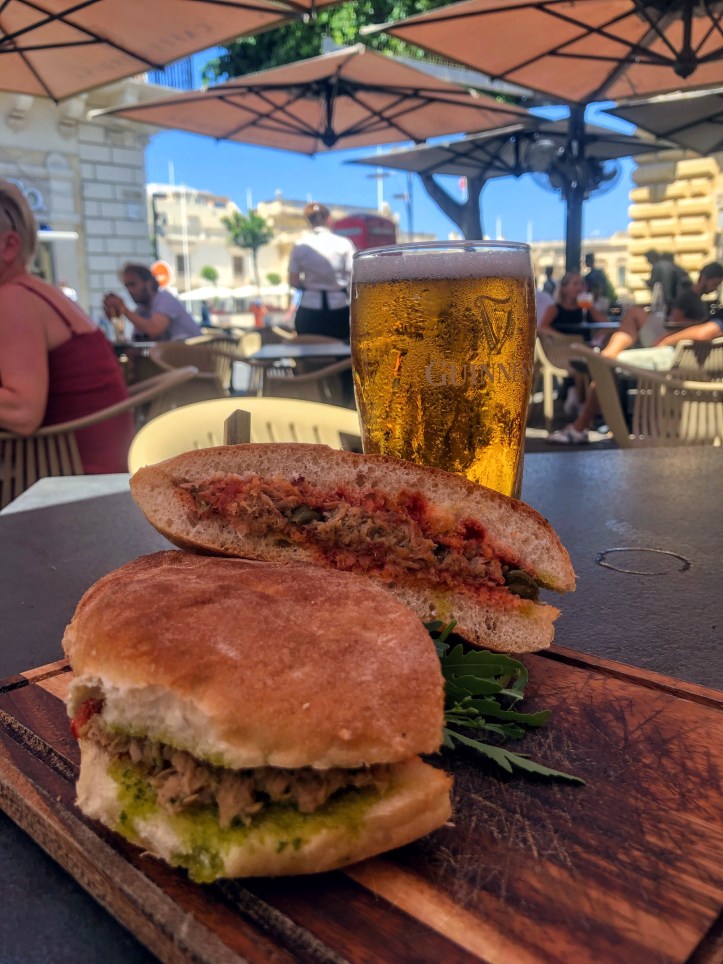
Lunch: Caffe Cordina. After sweating it back up the hill to the center of the city, I ventured for lunch at one of Malta’s oldest restaurants that is still in operation, having opened its doors in 1875. The restaurant has both indoor and outdoor seating, and even though it was sweltering hot, I opted for an outdoor table in the middle of Misraħ ir-Reppublika (Republic Square), or also known as Piazza Regina. I quenched my thirst with some mineral water and an ice-cold Cisk Beer (pronounced Chisk), and satisfied my hunger by trying a traditional Maltese ftira. The restaurant menu had about five or six different types of ftira, but I went with the classic “Ftira Maltija,” which consisted of a mix of Mediterranean ingredients sandwiched between two slices of fresh Maltese bread. It was absolutely delicious and I could have easily eaten ten more.
Afternoon: I wrapped my time in Valletta by walking down some of the other busy streets in the city, including Triq San Pawl (St. Paul Street) and Triq Sant-Orsla (St. Ursula Street), as well as some of the beautiful alleyways. Houses in Malta are known for being made of limestone, plus the addition of beautifully colored box-type balconies.
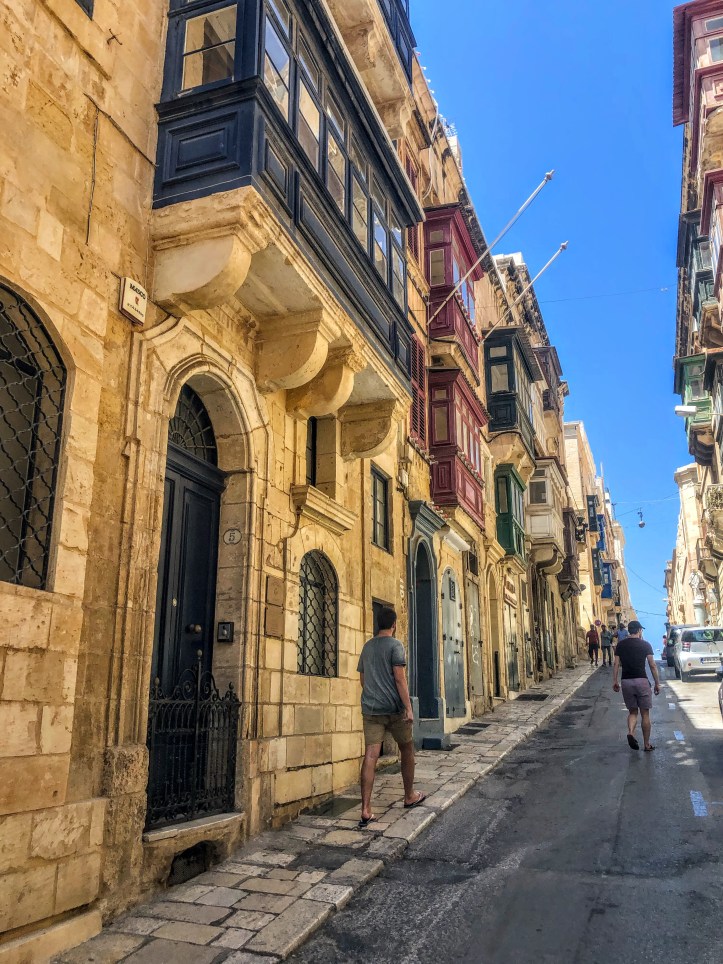
Another street not to be missed in Valletta is Triq il-Merkanti (Merchants Street), which is exactly as it sounds, a street of merchants, complete with shops and mini markets. It was following a stroll on this street that I bid farewell to Valletta, and returned to my room for a much needed dosage of air conditioning.
Evening: After I had mustered up the energy, I set out for my evening quest of visiting the ancient city, and former capital of the island, Mdina. Well, long story short, I took the wrong bus, and found out later that there were no busses running to Mdina from my then current location. So, instead of retracing my steps, I decided to take the opportunity to explore some of the more residential towns of Malta. The bus brought me to the town of Mosta, and this was the sight I beheld directly in front of me when I stepped off the bus.
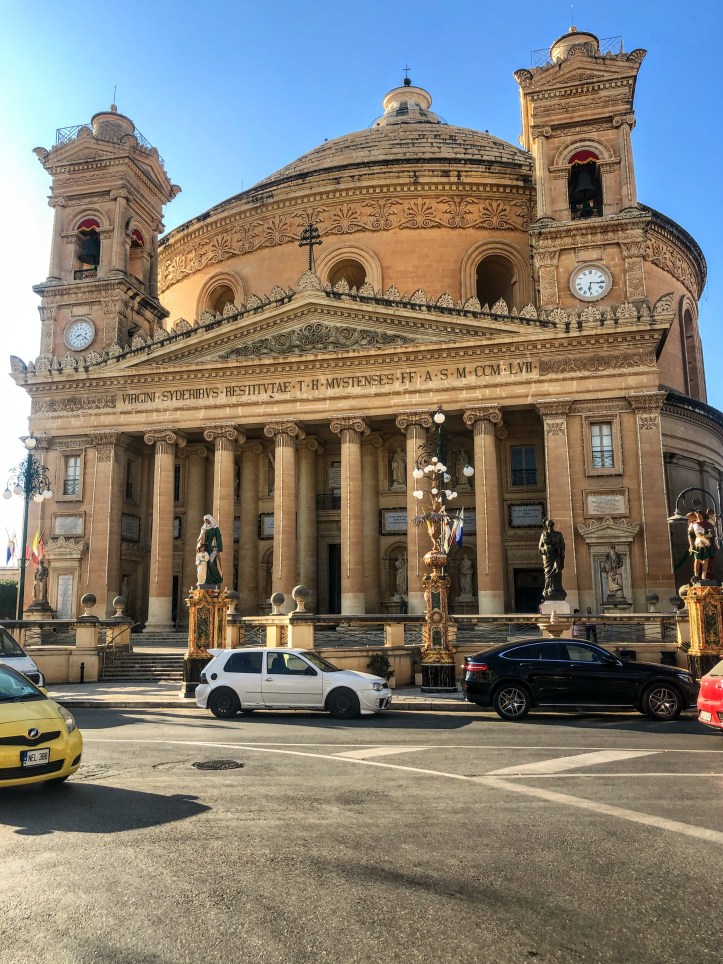
The beautiful Mosta Dome stood there in all of its glory, as its surroundings were being decorated for the then upcoming Feast of the Assumption. I walked around the town square for a bit, and then used the opportunity to try some local street food for dinner while waiting for the next bus. A bank-breaking 1.50€ bought me two savory Maltese pastries – pastizzi and qassatat. For cost reference, the pastizzi on the menu at Caffe Cordina in Valletta rang up at 0.95€, while that which I purchased in Mosta cost me 0.40€ (less than half). The qassatat was 1.10€, and believe me when I tell you that I was stuffed upon finishing it. When the bus arrived, I hopped on and took it all the way out to the town of Mgarr, located on the southwest coast of the island. The bus dropped me off right in the town square, where the local cathedral was illuminating a beautiful blue light as a local performance was put on.
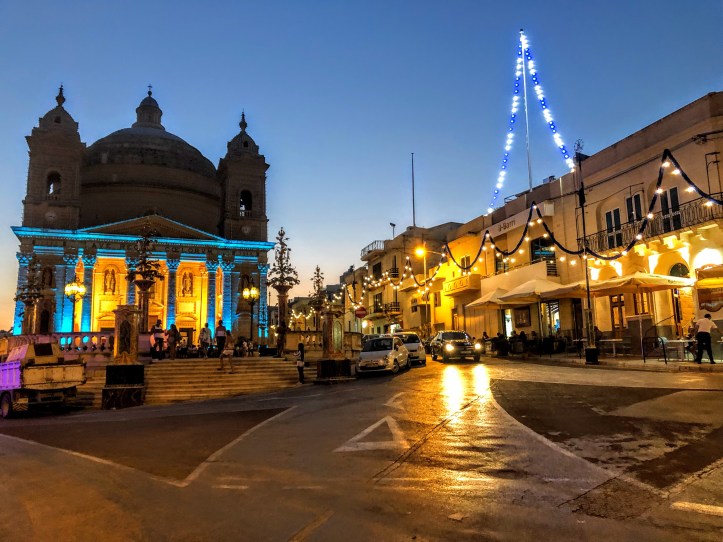
Unfortunately, for me, the entire performance was conducted in Maltese, so I could not understand what was happening. I thought that my knowledge of Italian would help me in understanding, but come to find out, the grammar and syntax of Maltese is based almost entirely on Arabic. In fact, it is the only Semitic language spoken in the European Union. Italian influence on the island has lended vocabulary words to the Maltese language, but many words are also Arabic-based as well, which in a nutshell, makes Maltese this incredibly unique fusion of Arabic and Italian. Anyway, as the performance continued on, I sat down at a local bar and treated myself to a Kinnie, the local bitter soda that makes for a delicious cocktail, but is also extremely refreshing on its own. I stayed in Mgarr for about an hour, as there was not much to do, before hopping back on the bus back to my hotel, thus calling it a night.
Day Two
Breakfast: Hotel – I woke up on time this morning to enjoy a lovely breakfast provided by the hotel. I was actually quite impressed with their selection, as well as with the dining room area in general. It sort of made up for the underwhelming first impression I had when I arrived.
Morning: I hopped on the bus once again and this time ventured to the town of Marsaxlokk on the southeast end of the island. The picturesque town is characterized by colorful fishing boats that populate the incredibly blue bay.
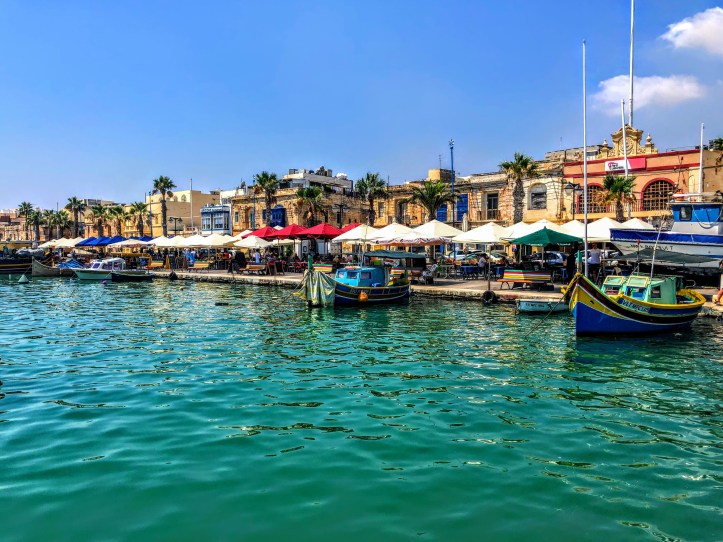
What the town is most known for, however, is the local fish market that takes place on Sunday mornings. Since it was Monday, in place of the food market stalls were some cute souvenir stalls, but I imagine the ambiance is nothing like it would have been on Sunday – I’ve heard the market can be quite hectic!
While here, I stopped for a mid-morning snack of some more pastizzi from a local vendor, with a refreshing Kinnie on the side. I’d be lying if I said I wasn’t craving one right now, they’re that good.
Afternoon: After leaving Marsaxlokk, I hopped back on the bus and rode over to the Three Cities – Isla, Bormla, and Birgu. These cities might also be known by their Latin names, Senglea, Cospicua, and Vittoriosa, respectively. These cities are located on the Grand Harbor, opposite Valletta, and have wonderfully beautiful cityscapes.
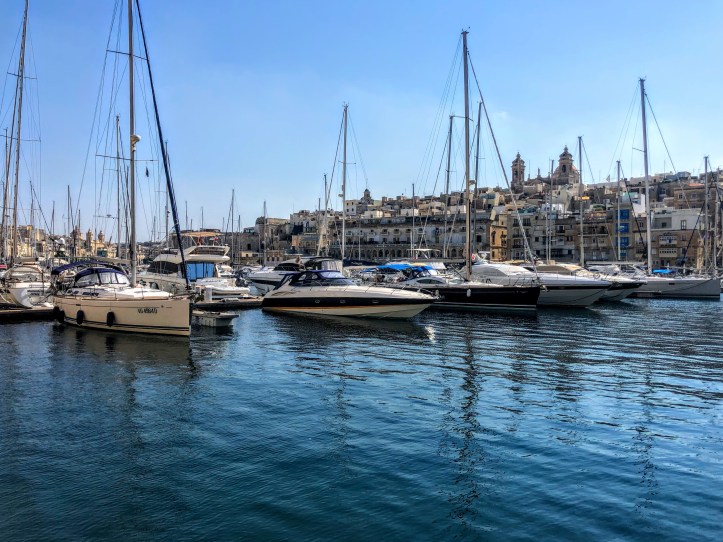
Starting at sea level surrounding the bay, they each follow a steep incline up to their main squares. Colorful streets line the residential areas surrounding the square, and, of course, no Maltese city would be complete without a big, beautiful church standing mightily in the center.
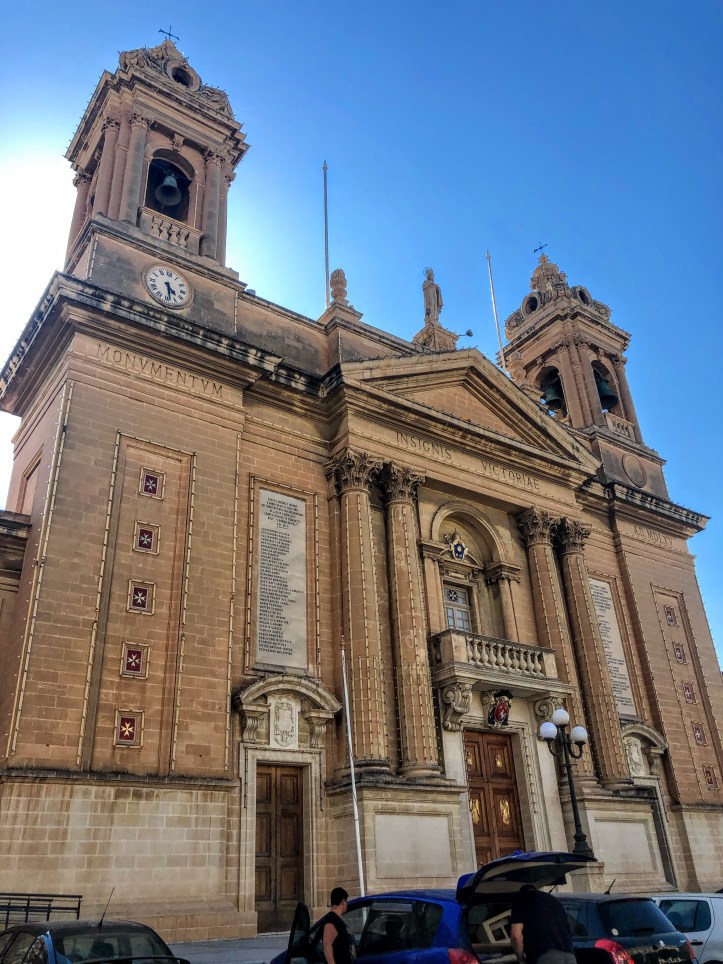
These cities do not have much to offer as far as tourist attractions go, apart from their churches and beautiful lookout points over the bay and the sea. I would argue, however, that it is worth taking a stroll through them, just maybe not in the dead of August heat.
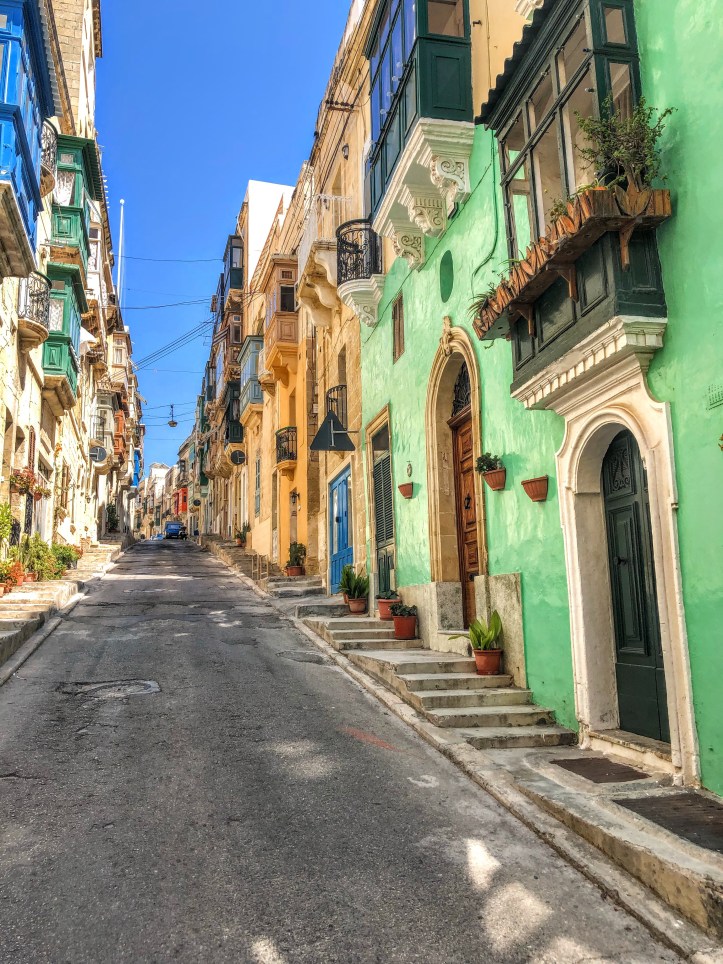
Evening: Following a much-needed cooling off in my hotel room, I set out to conquer the plans I had originally had for the previous night: visiting Mdina. I managed to get on the right bus this time, although it required a connection in Valletta, but it was totally worth it. As I mentioned before, Mdina is the former capital of the island, and unlike Valletta, which sits on the coast, Mdina is located in the middle of the country, and was built on top of a hill. Let’s just say that when I arrived there, I really appreciated the difference in altitude. Something to note about Mdina, it is contiguous with the comune of Rabat, which acts as a sort of suburb of Mdina, even though its population is 11,000 compared to Mdina’s 300 – yes, you read that correctly. The city of Mdina refers specifically to the ancient fortified city, the entry gate of which is accessed through Rabat.
Mdina should absolutely be on your must-see list if and when visiting Malta. If you are curious to learn more more about the ecosystems in Malta, then a visit to the local National Museum of Natural History in Mdina would be worth your while. Additionally, you can enjoy a peaceful stroll around the city that is free of motor vehicles, and admire the eclectic mix of Norman and Baroque styles of architecture that characterize the limestone edifices.
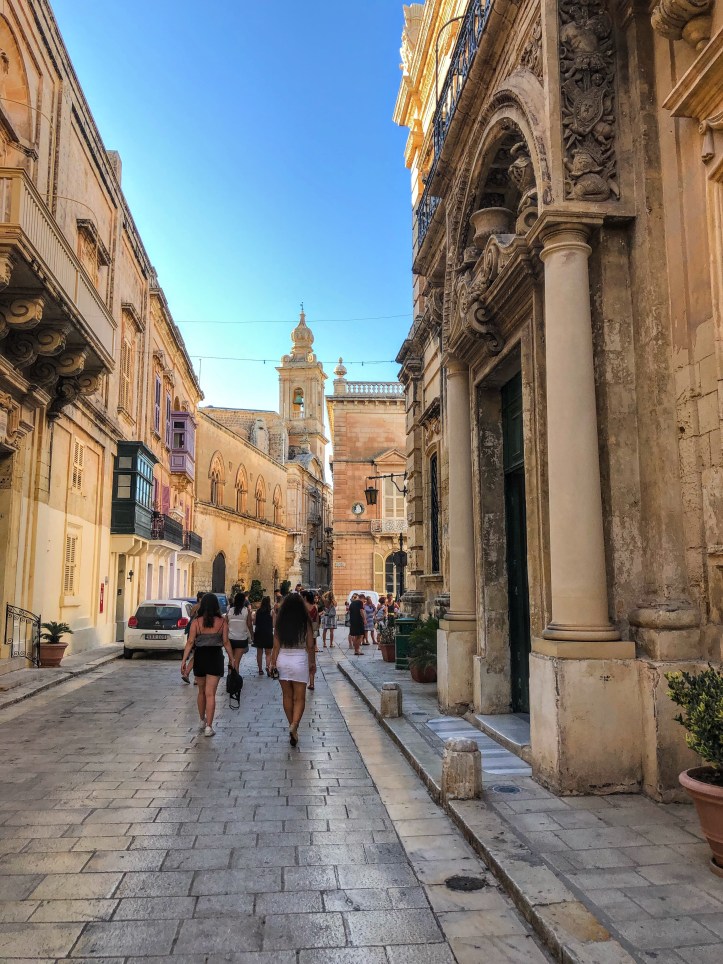
Dinner: Fontanella Tea Garden – You would be absolutely remiss if you came to Mdina and did not dine here, especially at table on the upper deck of the outdoor dining room.
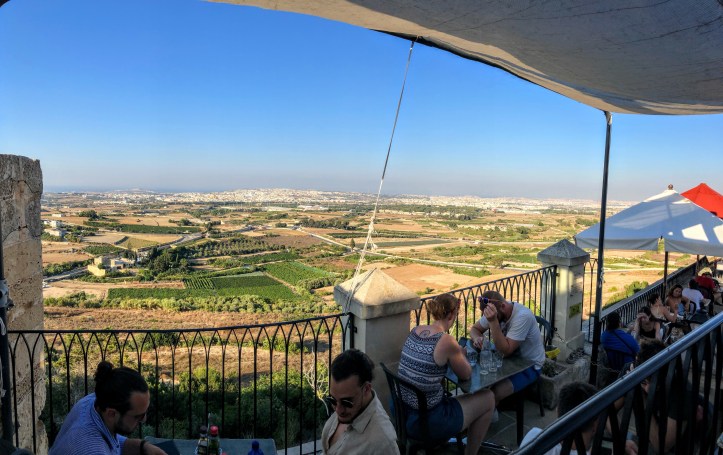
I can say with absolute certainty that this is by far the most breathtaking view I have ever had at a restaurant. On top of that, the pizza that I ordered was fantastic.
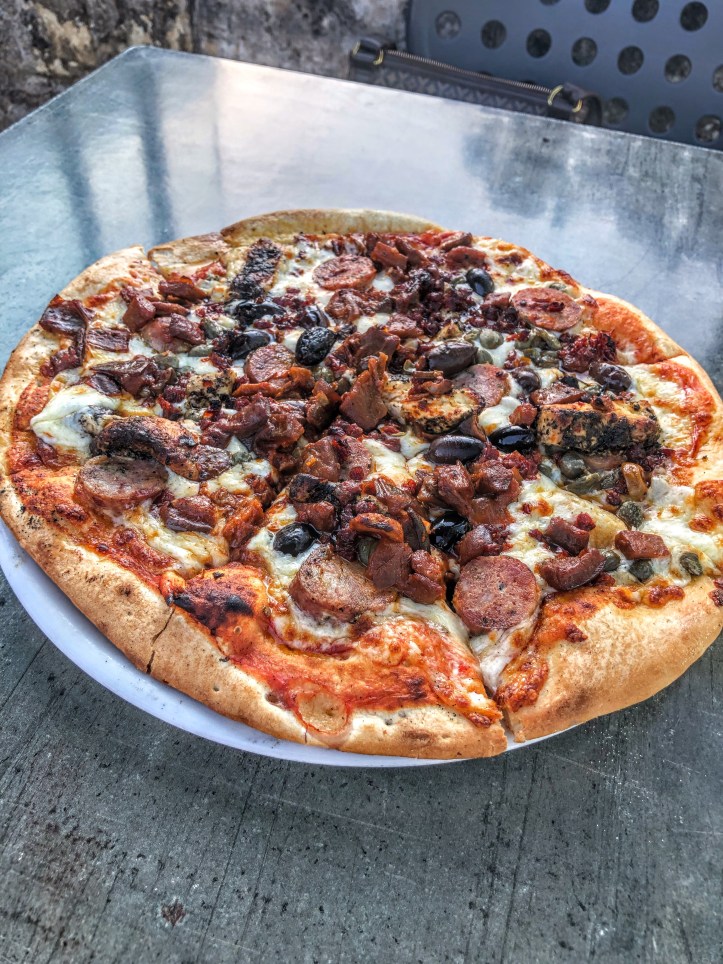
I am not one to let a good pizza go to waste, but there was so much packed into this pizza that I was stuffed after four slices. I would have happily taken the rest to go, but, alas, my hotel room did not have a fridge. I left dinner feeling more than satisfied, and decided to end my evening in Mdina by taking one last walk through the city. I’m so glad I did because I caught an absolutely beautiful sunset over the island.
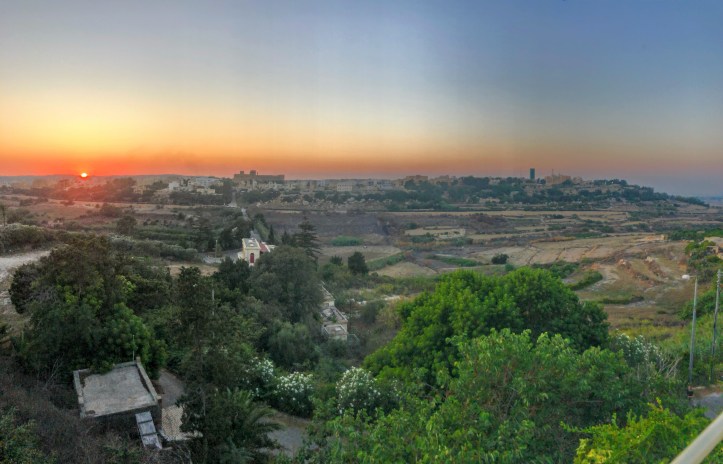
I wish the photos did it justice. All the more reason to visit Malta and watch a sunset yourself from ancient city walls!
Day Three
What trip to Malta would this have been if I did not make time for the beach? I felt like I had covered more than enough ground on the previous two days, so I rewarded myself with some quality relaxation time in the Mediterranean Sea.
My number one concern in having a beach day was finding a beach where I would feel comfortable enough being alone. I wanted to be able to spend time in the water without worrying that my belongings would be stolen. To my luck, I found the most perfect spot at the northernmost and westernmost point of the island – at the ferry terminal in Cirkewwa, to be exact. My original plan was to take the ferry to Gozo, the second island that belongs to Malta. However, time constraints, plus the fact that I saw this perfectly decent beach spot from the bus window, were more than valid reasons to forgo the trip.
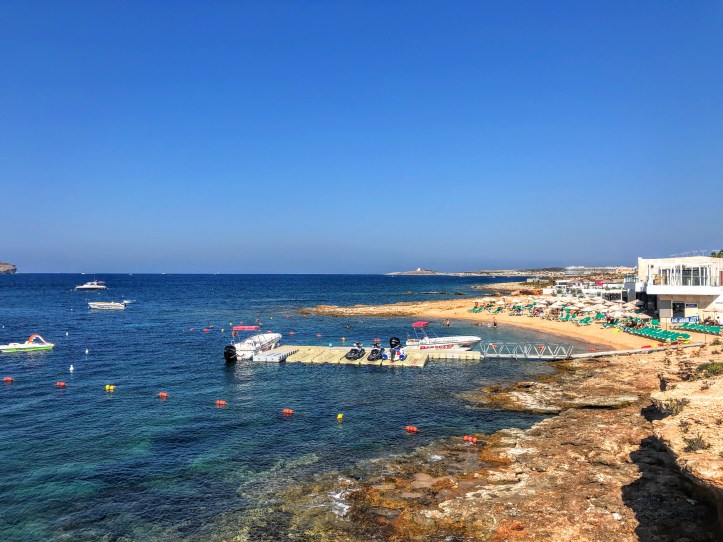
The beach spot belongs to the Paradise Bay Hotel, and is located directly outside their hotel restaurant, the Paradise Bay Bistro. Conveniently, I was able to purchase a lunch and snack from the bistro, which took care of my meal for the afternoon. Like most European beaches, there were lounge chairs and umbrellas that had been set up, and even though I was not a guest at the hotel, I could purchase a set for 8€ – totally worth it. The overall ambiance was great. I would say, in all, about forty lounge chairs, but maybe a third of them were occupied (if that). The area was secluded enough, and the hotel had roped off a section in the sea that was to be used for swimming. With that said, I could be at the furthest point, swimming right next to the rope, and still have a perfectly clear eye on my belongings. And even so, everyone else there was a hotel guest, and the majority of them were families with small children, so I felt wonderfully comfortable with my surroundings. Lastly, the water was magical. Nearly crystal clear and so warm, it was a true struggle to pull myself out when it was time to make my way back. And with that last day on the beach, my journey in Malta came to and end!
So now…
Do I want to visit again? Short answer: Yes. Long answer: Malta is a beautiful country filled with ancient cities, amazing people and food, and gorgeous beaches. However, there are many other countries in Europe that can offer that same style of vacation. Before returning to Malta, there are a number of other countries in Europe that I would hope to visit first, such as Croatia, Slovenia, and Greece, to name a few.
But, in all, Malta has been, by far, the most unique out of all the countries I have ever visited in Europe, not only on this trip but in my lifetime. I am so happy that I chose to include this island paradise on my getaway, and I would encourage anyone to take the chance and see it for yourself.
 Tales of Travels