Torino, Italy. You might know it as the city that hosted the 2006 Winter Olympics, or as the home of FIAT motors, or maybe you’re not familiar with it at all. I have spent quite a bit of time in Torino (Turin, in English), the fourth-largest city in Italy, over the last few years. The majority of my family in Italy happens to live there, and additionally, the city became the subject of my final thesis for graduate school. So, you could probably argue that my love for the city might be slightly biased, but there are some writers at CNN Travel who happen to think that Torino is pretty great, too.
Now, when I say that Torino is my favorite city in Italy, I am referring specifically to the large cities that also constitute metropolitan areas (eg. Roma, Milano, Napoli, etc.). There are, of course, smaller cities that are popular and well-known amongst tourists, and rest assured that I will, at some point, write a post about some of those places that are my favorites.
For being the fourth-largest city in Italy, I would argue that Torino is extremely underrated, which can be both a negative and positive attribute. Negatively speaking, Torino often lies in the shadows of Milan, the cosmopolitan business center and fashion capital of Italy, which is a mere ninety-minute drive away. Furthermore, its cultural, historical, and/or culinary assets are not as well-popularized as some of the other Italian tourist destinations, which means that Torino does not attract nearly the same amount of foreign visitors as do Rome, Florence, or Venice. On a more positive note, less tourism traffic means that Torino still retains a certain air of authenticity. It is so easy to visit a city like Rome and fall into a tourist trap (eg. non-authorized tour guides trying to sell you overpriced packages, restaurants claiming to offer authentic food and charging absurdly high prices, and market stall vendors selling cheaply-produced souvenirs), and sometimes even feel simply overwhelmed by the amount of tourists who are there, especially during peak season. If you visit Torino, rest assured you will be completely void of all of that. You can visit wonderful museums without waiting hours in line while unauthorized vendors try to up sell you a bottle of water, you can dine in Piazza Vittorio while sampling some of the best regional Piemontese cuisine and pay a completely fair price, and you can take photos of some of the most beautiful cityscapes and landscapes without having hundreds of selfie sticks blocking your shot.
Please note that I am in no way comparing Torino to Rome, Florence, Venice, etc., in order to prove that Torino is a better city. This post is simply to share with you that many of the same assets you might consider valuable in other, more well-known Italian cities can also be found in Torino, without the chaos that the tourism market brings.
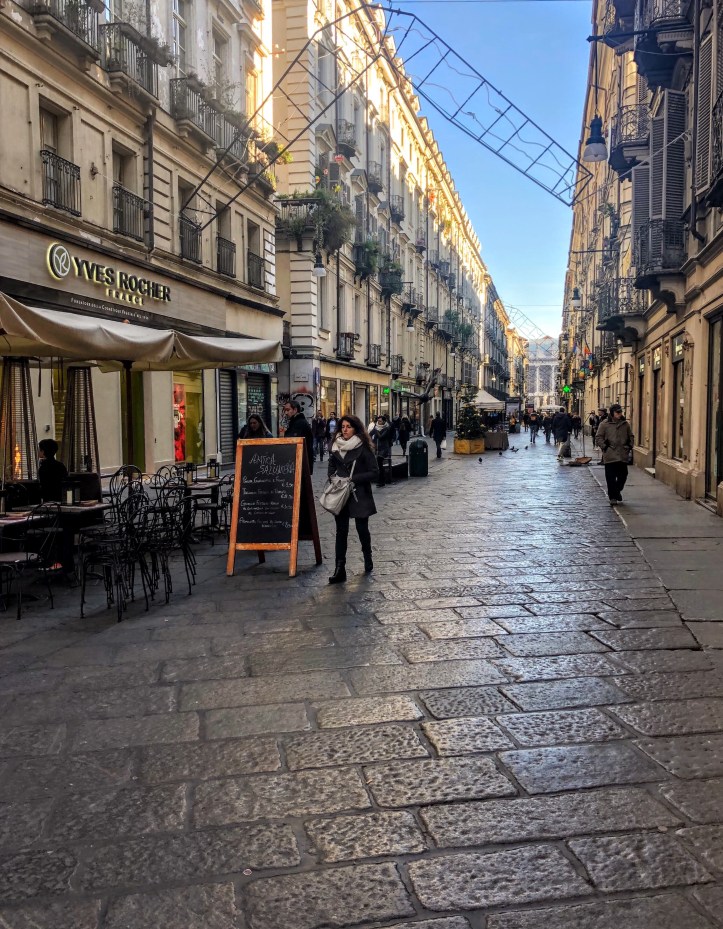
Architecture – Torino is known as the “Paris of Italy,” and this nickname of sorts is easily recognized through its beautiful architectural styles. From sidewalks covered with porticoes that shade you from the blistering summer sun, or offer you protection from the Alpine rain, to the flower pots hanging off the wrought iron balconies, the architecture of Torino offers a familiar, yet unique feeling.
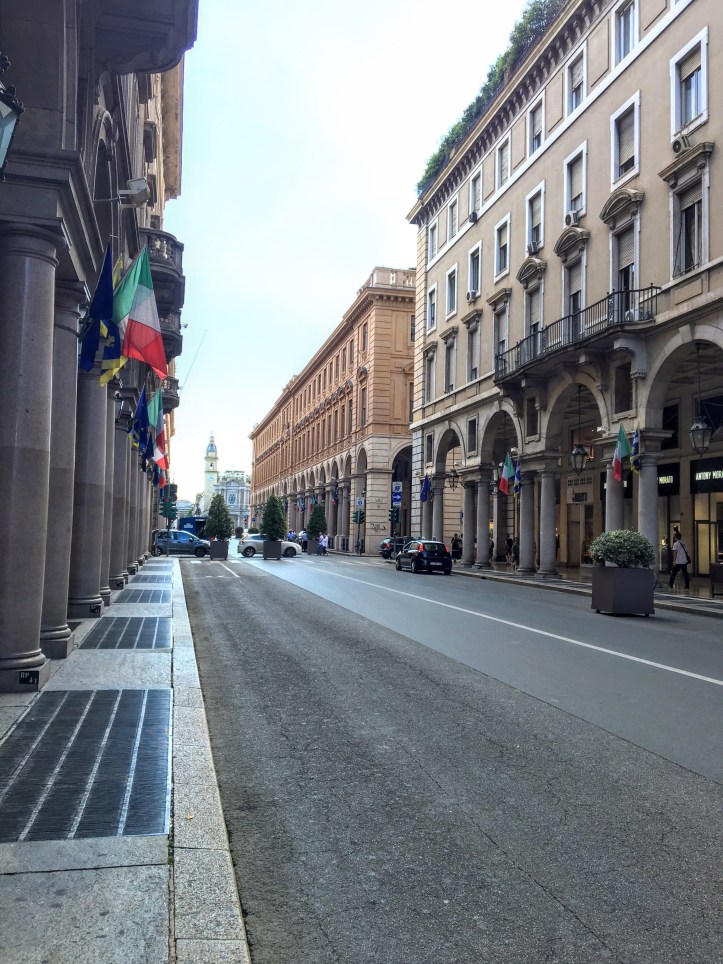
Contrasting the Parisian-style architecture is the city’s industrial architecture. Though not necessarily present in the historic center of the city, remnants of Torino’s large industrial past can be seen in other neighborhoods. Though these former factories might appear stale and bleak, a vast majority of them have been repurposed for modern uses, and are now viewed more as symbols of an industrial past that have sparked a new era of economic growth.
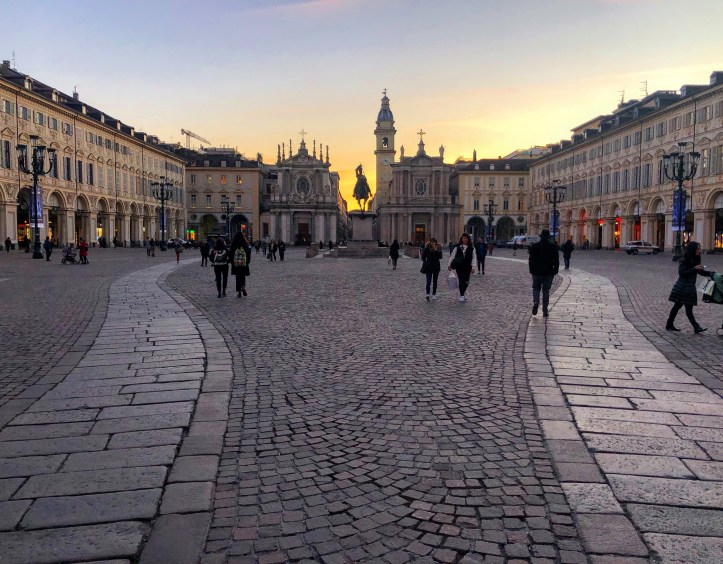
Piazze (singular: Piazza) – By far, one of my favorite elements of European cityscapes in general. I am overcome with a certain feeling of warmth whenever I walk through a piazza that is complete with bars and restaurants, shops, monuments, people sitting outside in all kinds of weather, and even the occasional band. I am a big proponent of socialization within the public sphere, and coming across a piazza in Europe reminds me of how much I wish we had more of these in the USA. Some of the most beautiful piazzas in Italy can be found in Torino. Piazza San Carlo is my favorite, but Piazza Castello, Piazza Carignano, and Piazza Vittorio are all equally stunning.
History – Long before Torino became the industrial, manufacturing center of Italy, it was an ancient city that was indeed part of the Holy Roman Empire. More specifically, it was the capital of the Duchy of Savoy, a state in the HRE, and therefore the seat of the House of Savoy, the famed royal family that was established in 1003 and led Italy into unification in 1861. Upon unification, Torino became the first official capital of a unified Italy, until it was changed to Rome in 1870. The Savoy family, however, continued to rule over Italy until 1946, when the country the voted to become a republic. Remnants of the past are still abundant as you walk through the city, providing a similar essence of an “open-air museum” that one might feel in Rome.
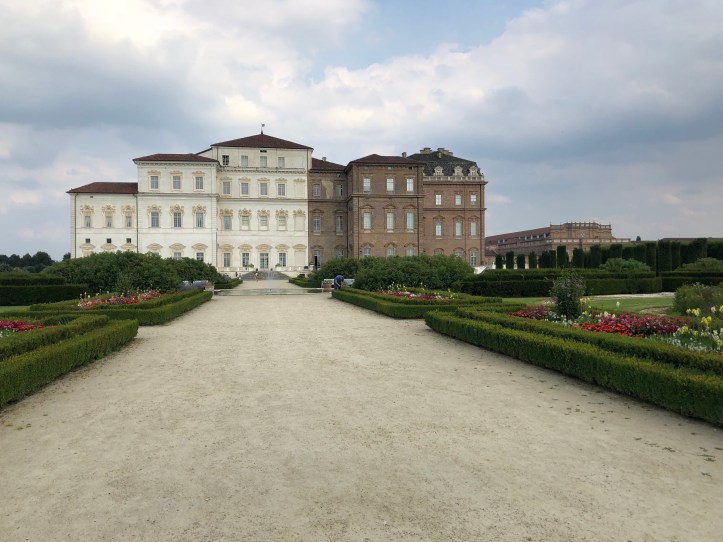
Museums – Much of history is memorialized in the form of a museum, and Torino is no exception to this pattern. Following Alexandria, Egypt, Torino is home to the second-largest Egyptian museum in the world, with an extremely impressive collection of artifacts. Outside the city, in the surrounding Town of Venaria, you can visit Venaria Reale, the palace that was home to the House of Savoy royal family.
You might consider coupling your tour of Venaria with a visit to the Museum of the Italian Risorgimento (Museo Nazionale del Risorgimento), back in the center of Torino. Given its extensive history of automobile manufacturing, Torino boasts the National Automobile Museum (Museo Nazionale dell’Automobile), featuring a collection of almost 200 cars represented by 80 brands. Lastly, another museum you might consider is the National Cinema Museum (Museo Nazionale del Cinema), located inside the Mole Antonelliana tower – one of Torino’s most iconic structures.
Sights – If museums are not your preferred attraction, worry not, because Torino has a number of incredible natural and structural sights that are worth a visit. Like many Italian cities, Torino also has a Duomo (which, fun fact, refers specifically to a church that represents the seat of an Archdiocese). Pop in for a brief visit and admire the Renaissance and Baroque styles that decorate the interior of the church. Something to note, the Duomo di Torino holds a famed relic, the Shroud of Turin, which is a burial cloth that is speculated to have belonged to Jesus Christ. Though the Shroud is kept in a locked vault in a dark room, it is pretty cool to walk into the Duomo di Torino and know that you are in the same building as this relic.
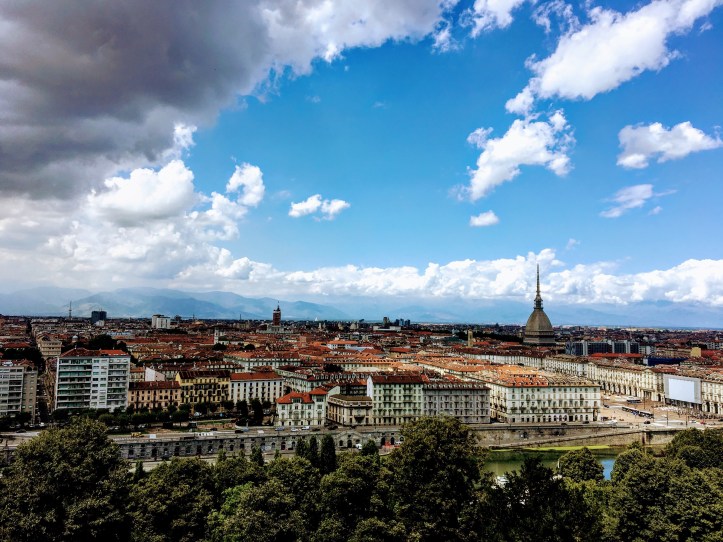
Following the church theme, there are two more churches nestled in the hills behind Torino, from which you can look out on spectacular views of the city below. The church that lies closer to the city center is the Church of Santa Maria at Monte dei Cappuccini. The church is rather small, but still beautifully adorned inside. The main attraction atop this mountain, however, is the view.
The church that is slightly further away is the Basilica di Superga, which was commissioned by King Vittorio Amedeo II of the House of Savoy. This stunning church is the burial ground for many of the members of the former royal family.
Back in the city, be sure to check out the Mole Antonelliana, which, as previously mentioned, is home to the National Cinema Museum, but also has a sky deck at the top of its tower.
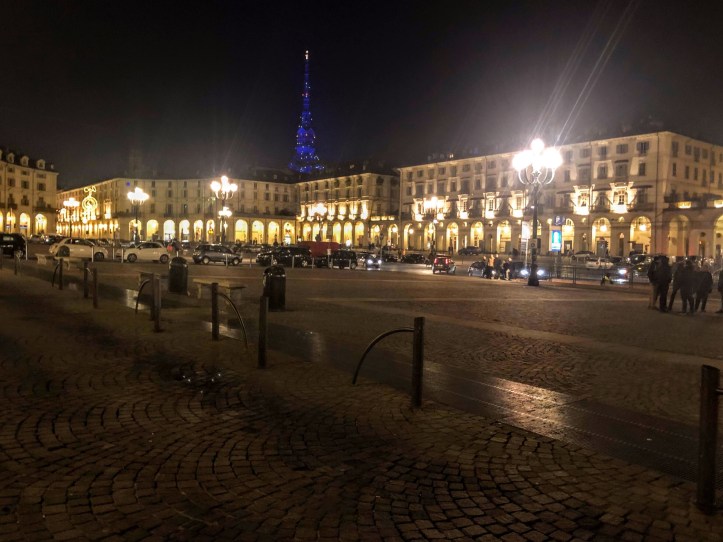
As you continue to stroll around the city, make sure you have a chance to walk down Via Lagrange, Turin’s main pedestrian strip, lined with shops, bars, and restaurants.
Lastly, no trip to Torino would be complete without visiting Lingotto, the former manufacturing facility of FIAT automobiles. The interior is not a museum, but rather, a completely redesigned mixed-use development that holds a shopping mall, cineplex, a convention center, two hotels, business offices, and classroom space for the Torino Polytechnic University.
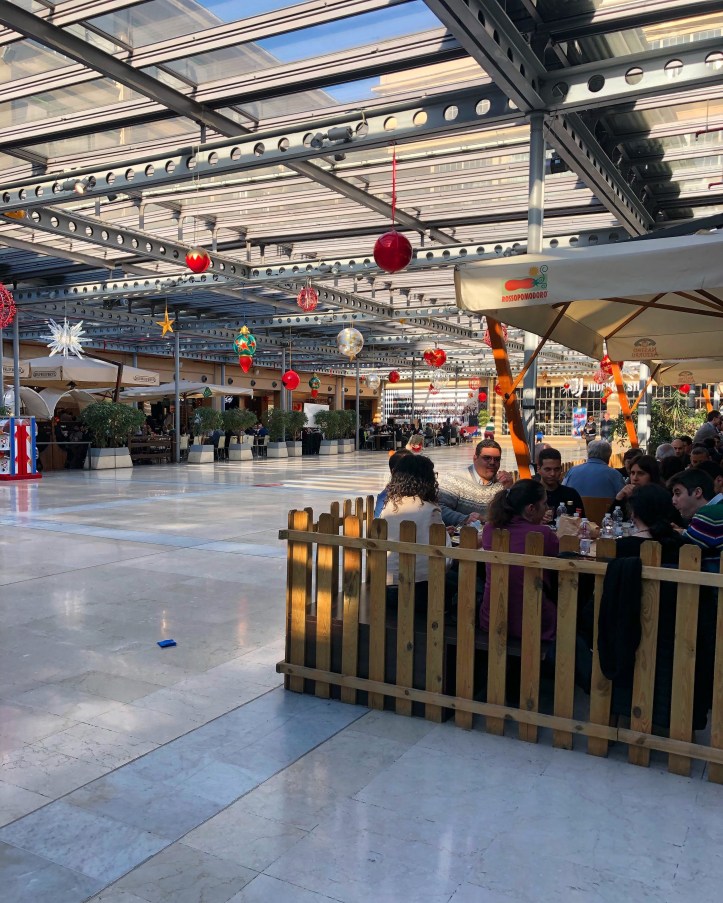
If you happen upon a rainy day while visiting Torino, visiting Lingotto would be a great way to pass an afternoon. Not to mention, the FIRST Eataly in the world is located right across the street! Consider signing up for a regional wine tasting or a cooking class at Eataly to cap off your experience to one of Italy’s most breathtaking cities.
Curious as to how you might spend a weekend in Torino? Look out for a future post!
 Tales of Travels